
Carbon offset reforestation is one of the most visible climate actions companies can take—but it’s also one of the easiest to get wrong. Between exaggerated carbon claims, weak monitoring, and short-lived plantings, many “tree projects” struggle to prove real climate impact.
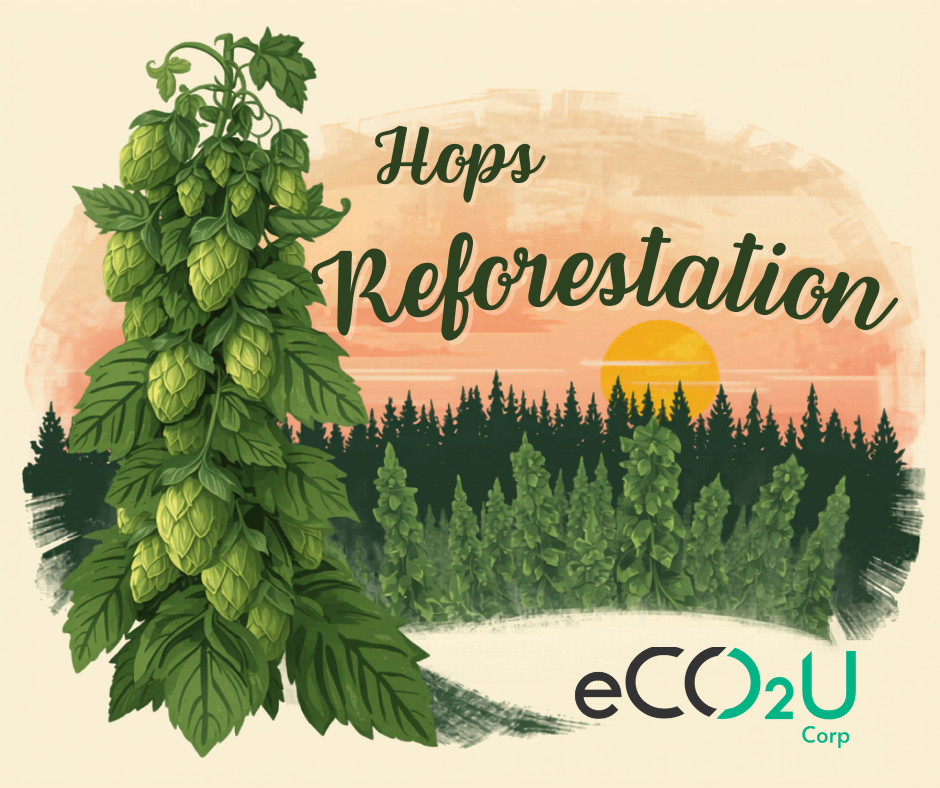
A new wave of initiatives is focusing on reforestation models that deliver both ecological value and long-term durability. One model gaining attention is hops reforestation—where fast-growing, climbing hop plants are integrated into reforestation strategies in ways that can support livelihoods and improve project economics.
So what makes a reforestation project credible—and scalable—when the goal is measurable carbon sequestration and long-term impact?
This article outlines the credibility checklist and the practical design choices that differentiate real carbon offset reforestation from marketing-first tree planting.
Why credibility matters in carbon offset reforestation
A credible carbon offset reforestation project must answer one basic question:
Would this carbon sequestration have happened without the project—and will it last?
If the answer is unclear, carbon credits become risky. Stakeholders increasingly scrutinize reforestation claims because:
- Buyers want offsets that hold up under audit and public review
- Regulators are tightening rules on environmental claims
- Communities and landowners want projects that deliver lasting benefits
- Climate impact requires permanence, not temporary canopy cover
Credibility is not just about compliance—it’s about ensuring that the reforestation project actually removes carbon from the atmosphere and keeps it stored.
How hops reforestation can improve project viability
“Hops reforestation” can be approached in different ways depending on geography and species selection, but the core idea is that hop cultivation (or hop-like climbing systems) can be integrated to strengthen project economics and maintenance incentives.
Potential advantages include:
- Improved site stewardship: when local stakeholders benefit, survival rates often improve
- Diversified revenue: In some contexts, hop production can support ongoing costs
- Faster early-stage vegetation cover can help stabilize soil and microclimate
- A clearer operational plan: structured cultivation can create better monitoring and maintenance routines than ad-hoc planting efforts
Important caveat: credibility depends on ecological fit. A hops-integrated model should never override native ecosystem goals or introduce invasive risks. A credible project uses hop systems only where they align with restoration objectives.
Service spotlight: Carbon Offset Reforestation Project Design & Due Diligence
If you’re planning to invest in or develop carbon offset reforestation, treat it like infrastructure—designed, engineered, monitored, and improved over time.
Reforestation project feasibility & site selection
Credible carbon sequestration starts with the right land and the right plan:
- Baseline land condition (degraded land vs. existing forest)
- Climate and soil suitability
- Water availability and fire risk
- Land tenure clarity and community engagement
- Biodiversity and ecosystem objectives (native species priorities)
A strong feasibility phase prevents failures later – like low survival rates, land conflicts, or unrealistic carbon estimates.
Carbon sequestration measurement, monitoring & reporting (MRV)
“Tree counts” are not carbon accounting. A credible reforestation project should specify:
- The carbon pools included (above-ground biomass, below-ground, soil carbon where relevant)
- Growth models or field measurement protocols
- Monitoring frequency and sampling design
- Leakage and risk buffers (fire, pests, land-use pressures)
- Transparent reporting that can be independently reviewed
MRV is what turns carbon offset reforestation from a story into a measurable outcome.
Long-term maintenance planning (the credibility multiplier)
Many reforestation projects underperform not because planting is hard — but because maintenance is underfunded. Credible plans include:
- Multi-year survival and replanting strategy
- Fire prevention and risk response
- Invasive species management
- Training and local job creation
- Verified survival thresholds tied to payments or credit issuance
Hops reforestation can help here if it increases economic incentives for continued care, but only if maintenance is explicitly designed—not assumed.
The credibility checklist: what to look for in a scalable reforestation project
1) Additionality: is the carbon sequestration truly incremental?
A project is credible when it can defend that the carbon removals wouldn’t occur without the intervention. Red flags include:
- Land that was already regenerating quickly on its own
- Reforestation that would have happened due to existing policy mandates
- Unclear baseline documentation
Credible projects document baseline conditions and the “business-as-usual” scenario.
2) Permanence: will the forest carbon stay stored?
Permanence is the hard part. Carbon offset reforestation must account for:
- Fire risk and climate stress
- Drought and water availability
- Pest and disease dynamics
- Local land-use change pressures
Look for explicit risk management, buffer approaches, and long-term governance—not just 1–2 years of planting activity.
3) Ecological integrity: native species and ecosystem fit
Credible reforestation projects prioritize ecosystem restoration outcomes:
- Native or ecologically appropriate species
- Habitat connectivity and watershed function
- Soil stabilization and erosion reduction
- Avoidance of monocultures that can be brittle
If hops are included, the plan should clarify their role, location, and controls to ensure the core forest restoration objective remains intact.
4) Community partnership and land tenure clarity
Projects become scalable when people trust them and benefit from them. Credible projects address:
- Free, prior, and informed consent where applicable
- Benefit-sharing mechanisms
- Local jobs and capacity building
- Clear land tenure / use rights and dispute processes
5) Verification-ready MRV and transparent claims
Scalable carbon projects are designed to withstand scrutiny:
- Clear MRV protocols
- Data management and audit trails
- Conservative assumptions
- Claims that match what’s measured (avoid overstating)
The best projects don’t just say “we planted trees”—they show survival, growth, carbon accounting logic, and third-party review readiness.
How to scale carbon offset reforestation without losing quality
Scaling isn’t about doing more acres with less rigor. It’s about standardizing what works while respecting local conditions.
Practical scaling levers include:
- Standard operating procedures for site prep, planting, and maintenance
- Consistent MRV templates with flexible local parameters
- Training programs and local contractor networks
- Modular project design (pilot → expand → replicate)
- Landscape partnerships that connect multiple land parcels into a coherent restoration corridor
For organizations looking to restore high-impact landscapes, eCO2U’s work on priority restoration offers a helpful reference point: Reforesting Critical Areas.
Credibility is built into the design—not added later
Carbon offset reforestation can deliver meaningful climate impact, but only when projects are engineered for durability: ecological fit, long-term maintenance, conservative carbon accounting, and transparent monitoring.
Hops reforestation may support scalability by improving project economics and stewardship incentives—yet it still must be grounded in ecosystem goals and verification-ready MRV. In the end, credible carbon sequestration is less about planting events and more about long-term outcomes.
If you’re considering a carbon offset reforestation investment—or developing a hops-integrated reforestation project—eCO2U can help with feasibility, project design, and monitoring strategies built for credibility and scale.
Learn more about our approach and priority landscape restoration here: Reforesting Critical Areas. You can also schedule a consultation with eCO2U to evaluate your reforestation project goals and carbon sequestration strategy.